Homeschooling seems to be a never ending search for perfection. I constantly tweak the boys programs and try to share how things are working for us. However, one area I have posted very little about is Language Arts. The reason is I have never been fully satisfied with what we were doing.
Overall, we are moving towards incorporating ideas from the Charlotte Mason approach in all subjects - more living books, less workbooks, more narration, and less testing them on what they don't know. I also like her idea of keeping school to 20 min blocks, although with toddler and baby in tow, I've had to throw the more rigid time based schedules out the window and keep to more flexible task based schedules, hence the "stack system".
Overall, we are moving towards incorporating ideas from the Charlotte Mason approach in all subjects - more living books, less workbooks, more narration, and less testing them on what they don't know. I also like her idea of keeping school to 20 min blocks, although with toddler and baby in tow, I've had to throw the more rigid time based schedules out the window and keep to more flexible task based schedules, hence the "stack system".
The "living books" idea is an easy one to run with for us. There are many great resources to find books, including the simple pleasure of perusing the shelves of the library to see what you find. Some of our favorite books have been found this way and when we find an author we like, I'll do a search to see what other books they have written. Sometimes the author is a one hit wonder and sometimes you end up with a bundle of neat books to read. Soon I'll be adding a separate page to my blog to include all our favorite books, authors and resources.
History is an easy subject to do with living books and we have really enjoyed this approach. We do have a core curricula for history study, but it just serves as a backbone for which living books we are going to read. We started our study of U.S. History with Columbus. My goal is to make it through the Civil War by year-end. However, since we are only on the Revolutionary War, we may not make it because there are many, many interesting books to read. The rewards to the this immersion into living history books approach is that my boys are remembering what happened, the people it happened to and God's providence through it all.
Applying Charlotte Mason theories to Language Arts has been little less intuitive. My understanding is she believed that a child will learn how to write well by reading well written literature, while also incorporating narration and dictation. Not being the best writer myself (you may have noticed), I was/am worried this approach may be too simplistic. I moved around often as a kid and as a result, never took a grammar class, never diagrammed a sentence and have only just started to learn the parts of speech since starting CC (prior to that I only knew the Saturday morning "SchoolHouse Rock" version). Therefore my concern is that not having that background has hindered my writing ability over the years.
Yet we went ahead anyway and dropped Lance's Language Arts Curricula all together. Lance was really pushing back about not wanting to do it. When he chose not to do it one day and miss running with his father, I knew we had a serious issue. This program was the latest in a long line of Language Arts curricula I have purchased. Chris and I sat down that night to reevaluate what we were asking him to do. We discussed whether or not it was important for an eight-year-old to be able to diagram sentences, to know and be able to identify the different parts of speech. Our conclusion was that someday he'll need to know them to become a proficient writer, however that day was not now. Chris looked at the curricula we were using and reminded me that it was testing him on what he didn't know and that I'd said that wasn't the direction I wanted to go. That's why we've scrapped his language arts curricula and are not replacing it with anything for now.
The following is what we are doing for Language Arts and how it relates to the Charlotte Mason approach:
- The "All About Spelling" program utilizes a multi-sensory approach which includes the dictation of sentences, not just word lists. Dictation is a big part of the CM approach. Bonus is that Lance enjoys doing this, especially putting the "desperado" words in jail i.e. ones that don't follow the rules.
- "Pentime" to practice his cursive writing. After the letters are learned, practice is done through the rewriting of poems and bible verses. This aligns with CM in that she believed that rewriting proper literature is how children learned punctuation. Lance has the most beautiful handwriting, I only have him do one page a day for practice and he really enjoys it.
- For narration, we will continue using the "Christian Liberty Press Nature Readers", he reads a portion and then closes the book and narrates what he just read back to me.
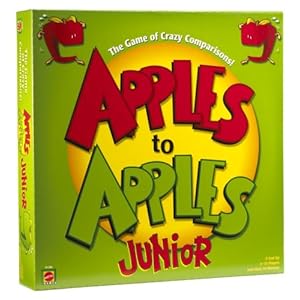
- For writing practice, he is continuing to do his daily journal entries, an activity both boys are really enjoying. I have recently added an additional element of fun to this activity. According to CM, vocabulary is learned not by memorizing lists but by using new words in speech and writing. One suggested way of doing this is a game called "Apples to Apples*". In addition to playing this game, I now use it to choose the "word of the day" that they have to use somehow in their journal entries. The boys like this new challenge and its helping to expand their vocabulary, making their writings more interesting. I have also added a "banned list", which includes any word they use way too much; fun, cool, etc. If they have spelling errors in their journals I don't point them out directly but I do add them to their next spelling word review. The idea of the journals is first and foremost for them to express themselves and not have to worry too much about grammar and spelling. Hopefully, over time they will improve their sentence structure and spelling as they experience more of both in their reading and "All About Spelling" program.
Lance is also devouring books. A friend recently game us a set of children's encyclopedias and I think he's read half of them already and looked through the rest. He and his brother believe going to the library is like going to a theme park. For now I am comfortable that what we are doing is sufficient for his study of language arts.
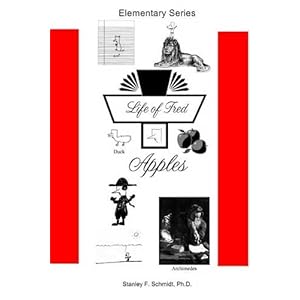
As a bonus, I've recently added a living book component to his math curricula, called "Life of Fred". A while back, I looked through one of the upper level algebra books in the series and knew Lance would like it once he reached that level. When a friend recently informed me the author had just completed a 10 book elementary series, I quickly bought it. "Life of Fred" is both entertaining and educational, the perfect balance for teaching. Ironically, we introduced the new books the day after we told him we were taking a break from his language arts curricula. After reading the first chapter he had two questions: 1) Is this my new language arts curricula? and 2) Can I read the rest of the book? The answer to both questions was "no", but I was thrilled by this response. I am letting him read chapters as rewards for completing his other math work or on days when he has a quiz or test. Math is the one subject I can't do completely without workbooks but its nice to do a little of both. I hope it will help him understand math from a relational standpoint, since for Lance if its not relation-based he's really not very interested in it, that's just who he is and I love him for it.
To find out what is so neat about Fred, sample chapters are available from the site.
When he gets a few years older the next curricula I will probably try is "The Write Foundation", here's the review I read that made me interested in it but its geared for the 11 and above crowd.
*Note: Be careful of the adult version of "Apples to Apples", it has some situations I didn't feel appropriate for my children's age range. Because of that we went ahead and just started with the "Apples to Apples 7+" version, which may be a bit too simple but everyone still enjoys playing.
To find out what is so neat about Fred, sample chapters are available from the site.
When he gets a few years older the next curricula I will probably try is "The Write Foundation", here's the review I read that made me interested in it but its geared for the 11 and above crowd.
*Note: Be careful of the adult version of "Apples to Apples", it has some situations I didn't feel appropriate for my children's age range. Because of that we went ahead and just started with the "Apples to Apples 7+" version, which may be a bit too simple but everyone still enjoys playing.

No comments:
Post a Comment