The boys are really starting understand that these ancient civilizations couldn't have happened by chance. All the ancient civilizations we are studying, though separated geographically, have similar cultures, beliefs and knowledge because they came from a common background; Noah's sons. Having personally been taught with traditional secular beliefs of man's development, I find myself constantly amazed at all I'm learning too; how it is clear, chance could never explain so many similarities.
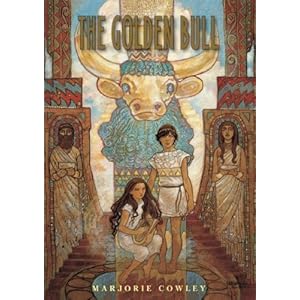 READ ALOUD BOOK: We continue to read "The Cat of Bubastes". In addition, I am having Lance begin reading "The Golden Bull" by Marjorie Cowley. This book is written at an early chapter book level. The author used the help of many archeologist to create this living history book about life in Ancient Ur. This is the only living history book I have found about life in Mesopotamia, it focuses on the caste structure and its effects, along with the process of gold metallurgy.
ART HISTORY: Since flowers are a large part of Chinese art, we studied Georgia O'Keeffe (It's a loose connection I know). We read "Georgia Rises" by Kathryn Lasky. Then I found this great art project called "Zoom in Georgia O'Keeffe Flowers" on Practical Pages blog.
1782 BC
Code of Hammurabi
- REVIEW: MAP TREK #6 Sumerians
- Read “Treasure Hunters - The Search for Lost Cities” by Nicola Barber pgs. 8 -13 I really like this book. It approaches teaching about ancient/lost cities in the order they were found by archeologists, how they were discovered and what they discovered. It covers ancient civilizations from around the world and through the ages; ie. Minoan, Troy, Greece, Pompeii, Inca, Myan etc.
- Read “Everything You Need to Know About - World History” – The Babylonians pg. 4 This will be the basis of our memory narration for this point.
- Read and look at pictures of Babylon and actual tablet in “Lost Civilizations” pgs. 192-195
- Watch “Ancient History Mesopotamia” This is a nice review of different civilizations of Mesopotamia http://www.youtube.com/watch?v=-58v5uGJAt4&feature=related
- Mark Timeline

1766 BC China’s Shang Dynasty
DAY 1
- REVIEW: Timeline; Students narrate about an item on the timeline
- Read “Everything You Need to Know About - World History” – China pg. 32-33
- Watch “Yin Xu ShangCapital Anyang” (26 min.) This is a great video shot in China that really brings the Dynasty and its people to life. http://www.youtube.com/watch?v=7AEoO0HShQE&feature=player_embedded#
- Look at Shang art in “Imperial Tombs of China” - focus on fact much of their art was made with bronze and the significance of that fact.
- Mark Timeline
- REVIEW: Narrate what they remember from the video about Shang Dynasty in China
- Read Shang excerpts from “Chinese of the Shang, Zhou and Qin Dynasties”or you can use this site http://www.historyforkids.org/learn/china/history/shang.htm
- MAP TREK: Map #20
- Listen to some traditional Chinese Music http://www.sinohits.net/music/10best.htm
- Read “The Silk Princess” by Charles Santore This is a beautifully written and illustrated story. I might buy it just to have around and read.
- Prepare for Art project (black paint, paper and broad brushes)
- Read “The Pet Dragon” by Christoph Neiman letting children practice different characters as you read. After finishing the book draw, a person using the characters for the different body parts. This is a fun little book. The boys really enjoyed this project and it was a great extension to the video we watched.


Memory Narration:
The city of Yin, along the Yellow River, was the capital of the Shang Dynasty. Like other early civilizations the Shang Dynasty professed a very modern civilization; farming, sewage systems, the wheel and chariots, pyramids (though upside down), use of bronze and a written language. Dissimilarly to other ancient civilizations, they still use a character based system for writing today. The Shang dynasty used tortoise shells to write their questions to the gods and provided greatest clue to life in the Shang Dynasty. The people of the Shang Dynasty had similar religious beliefs to that of Sumer and Egypt; they taught the “you can take it with you philosophy”; burying all the rulers would need with them; including their servants. One of the most famous people was Lady Fu Hou, the wife of Shang King; she was unique in that she was a successful military leader and priest; two positions not traditionally held by women. She was so important that she was buried in the palace far from the other tombs and as a result was the only tomb found intact. Another Empress is credited for learning the secret to spinning silk; a key trade item in China for thousands of years.
There are two books I got from the library that we didn’t have time to use this week. However, I plan to use them in the future for review of the Shang Dynasty and study of the Chou/Zhou Dynasty.
The city of Yin, along the Yellow River, was the capital of the Shang Dynasty. Like other early civilizations the Shang Dynasty professed a very modern civilization; farming, sewage systems, the wheel and chariots, pyramids (though upside down), use of bronze and a written language. Dissimilarly to other ancient civilizations, they still use a character based system for writing today. The Shang dynasty used tortoise shells to write their questions to the gods and provided greatest clue to life in the Shang Dynasty. The people of the Shang Dynasty had similar religious beliefs to that of Sumer and Egypt; they taught the “you can take it with you philosophy”; burying all the rulers would need with them; including their servants. One of the most famous people was Lady Fu Hou, the wife of Shang King; she was unique in that she was a successful military leader and priest; two positions not traditionally held by women. She was so important that she was buried in the palace far from the other tombs and as a result was the only tomb found intact. Another Empress is credited for learning the secret to spinning silk; a key trade item in China for thousands of years.
There are two books I got from the library that we didn’t have time to use this week. However, I plan to use them in the future for review of the Shang Dynasty and study of the Chou/Zhou Dynasty.
- Growing up in Ancient China by ken Teague
- Made in China – Ideas and Inventions from Ancient China by Suzanne Williams

No comments:
Post a Comment