Showing posts with label ancient history. Show all posts

Monday, May 6, 2013

The Glory Departs - Egypt and Judah

I find it fascinating that once again the history of the bible and Egypt find themselves following similar paths.  As Judah goes into captivity in Babylon never to rise to great power again; we see the Egyptians too being ruled by various powers never to be a great nation again either.

I wish I had written this post when we were doing this study but alas vacation plans got in the way of doing so and I'm afraid I have forgotten many of the unique "Ah ha"s we had but I will do my best. 

690 BC Late Egyptian Dynasties (25-31) – The Glory Departs
  • REVIEW:  Timeline, narrate what they’ve learned about Egypt through Ramses II
  • Narrate and read excerpts of “Unwrapping the Pharaohs” pgs. 189-193
  • Read and look at pictures of Nubian Temples in “Lost Civilizations” pgs. 130-133
  • Map Trek:  Map #7
  • Read and look at pictures of Philae in “Lost Civilizations” pgs. 140-143
  • Narrate and read excerpts from “Unveiling the Kings of Israel” pgs. 121-125
  • Mark Timeline
  • Read “The Egyptian Cinderella” by Climo  This book is beautifully illustrated, nicely written, and enjoyed by all.
    • Discuss the class system and reasons for resentment
    • Discuss that this is loosely based on real Pharaoh Amasis (570-562BC)who married Greek slave Rhodopis.  Pharaoh Amasis was a general that over threw a weak Pharaoh and was the last of the great Egyptian Pharaohs.
    • Spend some time trying to re-create one of the drawings or scenes in the book


605 BC Babylon takes Judah Captive
  • REVIEW:  Timeline, Read again “Everything you Need to Know about World History” pgs. 2-5
  • Read VJTB pgs. 172-173
  • ACAB “Fascinating Facts” – The Hanging Gardens of Babylon pg. 42
  • Narrate and read excerpts from “Unveiling the Kings of Israel” pgs. 127-131
  • Read and look at pictures of Babylon in “Lost Civilizations” pgs. 192-195
  • Mark Timeline
  • Listen to:
    • What in the World – Disc 3 Track 2 “Babylon” (15 min.)
    • Digger Deeper – Disc 2 Track 3 “Hanging Gardens of Babylon” (10 min.)If you don't have these do an internet search, the size and complexity of these gardens was absolutely amazing.
Daniel – Hebrew Advisor to King Nebuchadnezzar
We continued to study the bible and thus Daniel using primarily the Hurlbut Study Bible.
Daniel's Answer to the King by Briton Riviere
Daniel – Hebrew Advisor to King Nebuchadnezzar
  • REVIEW:  Timeline and Daniel
  • Read Daniel 4:4-37 “The King Goes Crazy” - Remind students what you learned from "Unveiling the Kings", that insanity was not looked down on at that time and in that part of the world which is why his people were willing to wait till he regained his senses. 
  • Read Daniel 5:1-31 “The Handwriting on the Wall”
  • Read VJTB pgs. 176-177
  • Coloring Page http://www.funnycoloring.com/daniels-in-the-lions-den-3.htm
539 BC Cyrus King of Persia conquers Babylon – Jewish Return Begins
At this point its a good idea to point out the two different Darius' and how the Darius that befriended Daniel was a King UNDER Cyrus the great King of Persia who was only in charge of the city of Babylon, not to be confused with King Darius of Persia later in history.
521 BC King Darius I of Persia – Lost Battle of Marathon in 490BC
  • Narrate and read excerpts from “Unveiling the Kings of Israel” pgs. 133-137
  • Read and look at pictures of Persepolis in “Lost Civilizations” pgs. 200-213
  • Mark Timeline
480 BC King Xerxes Marries Esther the Jew
  • REVIEW:  Narrate what the student remembers about Esther
  • Read Book of Esther or Hurlbut Study Bible
  • Narrate and read excerpts “Unveiling the Kings of Israel” pgs. 139-144
  • Read VJTB pgs. 178-179
  • Play Chess or discuss how during the time of Xerxes Kings played chess with real people
  • Mark Timeline
467 BC Ezra Returns to Jerusalem
  • REVIEW:  Timeline, Persia and state of Jewish return
  • Read Hurlbut or Ezra 7:1-28, 8:15-31
  • Do you think that Artaxerxes I knowing Esther helped?
  • Read VJTB pgs. 180-181
  • Mark Timeline
454 BC Nehemiah and the Jewish Return
  • REVIEW:  Timeline, narrate what they remember about Nehemiah
  • Read Nehemiah 1:1-2:30, 4:1-23
  • Read VJTB pgs. 184-185
  • Act it out using blocks to build a big wall around a city
  • Mark Timeline
  • Read Aloud:  Within the Palace Gates:  The King's Cupbearer by Siviter
    • When we first started reading it was a bit heavy on the description (think Clancy), so we stopped for a bit and I finished on my own.  It’s a nice story but I think better suited for middle school or above.  The boys would not have understood how love motivated a lot of the characters and there was an unnecessarily gory scene which could have been left out and never missed.

Monday, April 1, 2013

New Kingdom of Israel and Egypt (Part 2)

This is the second half of this post "New Kingdom of Israel and Egypt (Part 1)"

931 BC Israel Divides into Two Kingdoms
Rather than going back and forth between Israel and Judah we chose to first study Israel.  Studying one kingdom at a time helped things stay clear in the boys' mind about which kings and prophets belonged in each Kingdom. It also happened to be the approach taken by the Hurlbut's Bible we are using for history.   We started with the study of Kings of Israel, Elijah and Elisha.
  • Respective chapters in Hurlbut's Study Bible and VJTB
  • MAP TREK:  Map #18 - Israel Divided Kingdom
  • Unveiling the Kings - starting on page 108
  • Mark Timeline
929 BC Thutmosis III - The Greatest Pharaoh
Front CoverThutmosis III expanded the kingdom of Egypt farther than any other pharaoh.  This expansion brought great riches to Egypt that were lavishly spent by his successors on monuments and temples.  He is the pharaoh referenced to in the book we read "Cat of Bubastes" by G.A. Henty, so we spent some time discussing what they remembered from that work.
  • Unwrapping the Pharaohs - pgs. 126-131
  • Look at Karnak ruins in "Lost Civilizations" pgs. 106-113
  • Storytime:  "Mummies Made in Egypt" by Aliki - This book goes deeply (but still at a child's level) into exactly how the Egyptians did mummification.  The boys thought it was equally cool and gross.
824 BC Amenhotep IV and Monotheism (Akenaten & Nefertiti - The Sun God)

Casting the Gods AdriftI find Akenaten fascinating. Little is truly known about his reign since the beautiful city he build was practically erased leaving a lot to conjecture.  I like the idea that he came closer to bringing Egypt back to worshipping the one true God but we'll never know for sure.  We read from Unwrapping the Pharaohs and then spent a few days reading a short chapter book, "Casting the Gods Adrift" by Geraldine McCaughrean.  This is an incredible book of historical fiction, fast moving and informative.  The author takes an archaeological discovery and uses her imagination and knowledge of ancient Egypt to create a story about how the evidence came to be.  I highly recommend reading this even if you're not studying Egypt.

802 BC Reign of Tutankhamen 
I think the boys (especially Lance) had been waiting all year to get to this Pharaoh.  
  • We started by reviewing the facts in Unwrapping the Pharaohs pgs. 158-161
  • Read "Tut's Mummy:  Lost and Found" by Judy Donnelly
    • Discuss how he was more famous in death than in life.  How that often happens to people, such as “starving artists”.    Discuss the idea of leaving a legacy, what do you want to be remembered for?  What was Jesus remembered for?
  • Read "Valley of the Kings" by Stuart Tyson Smith.  We read this over a few days, carrying us into our study of Ramses II.  At first I thought it would be too factual for the boys but it turned out to be rather entertaining and a nice way to wrap our study of the New Kingdom.
  • Finally we reviewed all we learned by watching "Tutankhamen's Treasures"
759 BC Ramses II - Fought the Hittites at Battle of Kadesh
  • We first did a quick review of who the Hittites were with "Everything you need to Know about History".  
  • Looked at Abu Simbel in "Lost Civilizations".  
  • To learn about how they found the Hittites watch this video "Lost Empire of the Hittites", it's fascinating to learn about the discovery and how it supports the biblical history.  Apparently until the last century people didn't believe that the Hittites really existed, they thought they were just another Bible "fable".  Then once again they had to accept that the Bible was not telling a fable but talking about a real people. 
  • Ramses II plays into all this by the writing on this temple and subsequent Hittites writings that confirm their conflict at Kadesh and the resulting first "non-aggression pact", a fact they both tried to minimize in their writing (As we learned about in the video and "Unwrapping the Pharaohs").  Ramses was rather fond of himself and built an enormous amount of monuments to himself.
770 BC Jonah
The book of Jonah is one of the boys favorites and the best source of information about Jonah.  We read a bit more in Unveiling the Kings of israel, VJTB and started discussions about the Assyrians.

722 BC Israel Falls to Assyria
We used this timeline point to review Kings of Israel, study about Assyria and begin learning about the Kings and Prophets of Judah using our core resources (Unveiling, Hurlbut, VJTB).

c. 1300 BC Assyrian Civilization Established in Mesopotamia
This obviously appears a little out of order.  When you're dealing with a civilization that existed for such a long period of time its hard to determine where to put it on a timeline.  Though we placed it at c. 1300 we waited to discuss them till they were referenced in the bible.
  • REVIEW:  Use Mesopotamian Puppets to narrate what they’ve learned about Sumer and Babylon including map work
  • Read “Everything You Need to Know About - World History”  – The Assyrians pg. 5
  • Read and look at pictures of Palmyra in “Lost Civilizations” pgs. 182-191
  • Read “You Wouldn’t Want to be an Assyrian Soldier” by Rupert Matthews.  The boys really like these "You Wouldn't...." books.  After we read together they grab them to read again on their own.
    • Discuss cultural ideas vs. Bible
    • Discuss cultural ideas vs. today
  • Map Trek:  Map #14 Assyrian Empire
  • Watch “Winged Bulls of Assyria” http://www.beyondpatmos.org/watchvideo.aspx?videoid=443

Wednesday, March 6, 2013

New Kings of Israel and Eygpt (Part 1)

I find it interesting that as the King Period starts in Israel, the Egyptians start a new period also, over throwing the Hyksos to rule their own people once again.

1051 - 1011 BC  King Saul

The Bible clearly provides the best means of teaching about King Saul.  I was unable to find any great living books on this period, so I stuck to our core resources.
  • Hurlbut's Story of the Bible - We continue to read this Childrens' Bible.  I like the way it weaves the stories of the bible together in a narrative, without distorting the facts.  I also appreciate how the author reminds the reader of how the current story ties to stories previously read.
  • Victor Journey Through the Bible (VJTB) - This is a great resource to have on hand when reading the bible; it has pictures explanations of customs, etc.  
  • Unveiling the Kings of Israel - This is a great resource for tying the bible to archeology.  The big insight on King Saul was that the Hyksos were the Amalakites.  The ones who attached the Israelites shortly after the Exodus and whom Saul was ordered by God to destroy for that act.  This ties in nicely our next timeline point which explains why the Amalakies were back roaming the desert.
  • Mark the Timeline.
1018 - 690 BC New Kingdom in Egypt (Dynasty 18-19)
This was a period of great power and affluence for the Egyptians.  During this period Egyptians abandon pyramid burials and move toward hiding their tombs in the "Valley of the Kings" at Luxor.  An interesting book discussing the archeological history of the area is "Valley of the Kings" by Smith and Bernard.  
  • Unwrapping the Pharaohs - Chapter 14 "Egypt Liberated" - Explains how the Egyptians freed themselves from the rule of Hyksos/Amalakies.  The story about the Hippo was entertaining to the boys.
  • Next,  I wanted to do a quick highlight of the of the five Pharaohs from this period we were going to focus on:  Hatsheput, Thutmosis III, Amenhotep/Akenaten and Nefertiti, Tutankhamen and Ramses II.  To do this I read, Unwrapping the Pharaohs - Chapter 15 "A New Day Dawns Over Egypt".
  • Next to get an idea of the new kingdom we looked at pictures of Luxor and Western Thebes in "Lost Civilizations" pgs. 114 - 129  (This is great coffee table size book of huge pictures you can get for $5 used on Amazon).
  • Mark Timeline
1011 - 971 BC Davidic Kingdom

Like with Saul the Bible provides the best source for teaching about King David.  It is interesting to not that secularist didn't use to believe he really existed (like King Arthur) until recently when archeological evidence proved otherwise.  Here are the other resources we used:
  • Hulburt's Story of the Bible
  • Victor Journey Through the Bible
  • Unveiling the Kings of Israel
  • Map Trek #15 - Israel's Golden Age
  • Mark Timeline
c.1000 BC Phoenician Civilization establishes their Alphabet 

Though 1000 BC is not when the Phoenician civilization began it is about the time that their method of writing was fully established so I chose to discuss them here since David and the King of Tyre were friends.
  • REVIEW:  Timeline, Minoan and Mycenae
  • Read “Everything You Need to Know About - World History”  – Phoenicians pg. 7
  • Read “On the Shores of the Great Sea” -  Chapter 11 “Early Pioneers” (4 pgs.) and Chapter 12 "Hiram, the King of Tyre"   http://www.mainlesson.com/display.php?author=synge&book=greatsea&story=pioneers  ** Note: All other stories from this book are accessible for Free from this link
  • Read and look at pictures of Leptis Magna in “Lost Civilizations” pgs. 144-149 (Home of Phoenicians and Carthaginians)
  • MAP TREK:  Map #16 - Phoenicia's Trading Empire.  We took a moment here to discuss Jonah and the city he wanted to visit that was marked on the map.
  • Mark Timeline
  • Watch “The Phoenicians” This site also contains a number of other interesting videos from the author of Unwrapping the Pharoahs and Unveiling the Kings of Israel.  Some tolerance most be given to the quality of tapes but considering many of these places are no longer accessible, they are worth watching.   http://www.beyondpatmos.org/watchvideo.aspx?videoid=468

950 BC Hatshepsut

Hatshepsut is a very interesting figure in Egyptian History.  The only true Egyptian female to be Pharaoh (Cleopatra was a decedent of one of Alexander the Greats generals).  There are all kinds of tales about who she was and why someone attempted to remove her from Egyptian history but it is important to remember that it is all conjecture, no one knows.  As a result, I chose to ignore the more Hollywood accounts, and stick to the milder theories, since both are equally viable.  Her temple at Deir el-Bahari is one of the most spectacular and well known.
  • REVIEW:  Timeline and narrate with Egyptian Puppets what they’ve learned about Egypt
  • Narrate and read excerpts “Unwrapping the Pharaohs” pgs. 118-123
  • Read “Usborne Time Traveler” pgs. 114-115 (Travel to Punt)
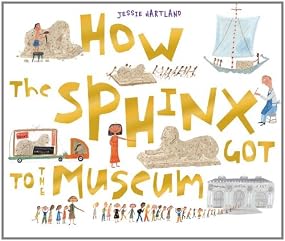
  • Read “How the Sphinx got to the Museum” by Jessie Hartland  This is a charming book about not just Hatshepsut but also the process of finding artifacts and getting them to the museum.
  • Mark Timeline
971 BC Solomon’s Reign
  • ART:  The Judgment of Solomon interpreted by various artists http://www.biblical-art.com/biblicalsubject.asp?id_biblicalsubject=193&pagenum=1
  • REVIEW:  Narrate what they remember about Solomon
  • Narrate and read excerpts “Unveiling the Kings of Israel” s pgs.  102-107
    • Discuss “Queen of Sheba” Hatshepsut visits “Punt” in 9th year, possibly to visit her sister Neferbity (Their father was Thutmosis I) whom Solomon married.  How that would have been why she was curious to meet him from correspondence from her sister.  How the gold found in Tut’s tomb proved she would have certainly had the wealth the bible discusses. 
  • Read "King Solomon and the Queen of Sheba" by Blu Greenberg - This is a fascinating story.  Make sure to read the preface and all the pages at the end.  The intellect in me was convinced in the Hatshepsut until I read this and the modern day believe of the Israelites or the romantic in me leans toward Ethiopia now.
    • Discuss now who you think the "Queen of Sheba" was?  Could both accounts be true?  Could Hatesheput have visited but Queen of Ethiopia be the one he fell in love with?
  • MAP TREK:  Map #17 - Solomon's Extended Kingdom
  • Read “On the Shores of the Great Sea” – Chapter 13 “King Solomon’s Fleet"
  • Mark timeline
Click here for Part Two of this post.

Monday, December 24, 2012

Time to Judge (Part 2)

Her's the continuation of Part 1 of explaining some changes in our history curricula.

We are back to having fun this week studying the world in reference to the word :-)

At the beginning of each lesson I will present Summary/Background before studying individual events:


Time of the Judges  (1380-1051)
As the Judges rule Israel other civilizations are active around the world...
  • The Hyksos rule Egypt this entire time To be discussed more during “The New Kingdom”
  • c 1300 The Assyrian civilization establishes in the Mesopotamian town of Nineveh To be discussed more at time they overthrow Israel
  • 1250 The Myceneans fight in the Trojan War We'll study Homer also
  • c1200 The Phonecians establish their trading culture on the shore of the Mediteranian To be discussed during the Davidic Kingdom
  • The Hittites rule to the north of Phonecia in southern Asia Minor  To be discussed with Ramses II
  • c1200 the Olmec Civilization cultivating in Mesoamerica  This is a bit hard to tie in other than an aside to note the beginning of "advanced" civilizations in Mesoamerica but it was a fun art project.
1250 BC Trojan War
  • REVIEW:  Narrate about Minoan and Mycenaean Civilizations; note this battle was the beginning of the end of Mycenaeans. 1100 BC begins the Dark Ages.
  • Read “Usborne Internet-Linked Greeks”  pgs. 14-15
  • Complete MAP Trek:  Early Greece (Focus on Minoan/Mycenea/Troy)
  • Read “The Trojan Horse” by Emily Little Note there are errors in the back of this book about Homer, i.e. that he "wrote" the poems and that he lived 700 A.D.
  • Make Trojan Horse Paper Craft http://www.dltk-kids.com/world/greece/m-trojan.htm  To make this sturdier we used cardboard, however the boys lost interest half-way and Christina ended up finishing it.
  • Mark Timeline
Address Homer -  900 BC  Homer
  • Read “On the Shores of the Great Sea”  (Free Book) – Chapter 17 “Siege of Troy”
  • Read “Usborne Internet Linked Greeks”  pg. 17,  86 (Homer)
    • Note the importance of Bards throughout history, how we’ll learn more about bards of Charlemagne (Roland) and William the Conqueror next year.
    • Note that the stories were told for many years before they were written down after the Greeks adopted the Phonecian alphabet (adding extra symbols for vowels) around 800BC
  • Read “On the Shores of the Great Sea” – Chapter 18 “The Adventures of Ulysses” (4 pgs.)
    • Discuss the way Homer uses words to really make the story come alive, how it was different that they other accounts of the battle we read.
  • Draw what you think the Trojan Horse looked like.  This was Lance's idea, he felt the picture on the Vertias Press Timeline cards was totally inaccurate because the box on top and windows would have been a give away.
Jared's on top - Lance's with zoom-in on bottom
1200 BC Olmec Civilization in Mesoamerica – The First Builders
  • REVIEW: Ice Age Land Bridges
  • Read and Look at pictures in “Ancient Mexico” by Longhena
  • Discuss how little is known of their culture but it is believed to have greatly influenced the later cultures in Mesoamerica.  How they still don’t know how they got the stone for huge stone heads from 100 miles away through swampy land.  How presuppositions of early man being primitive hinder archeologists from uncovering more about this culture.
  • Watch Video Olmec Art at de young Museum http://www.youtube.com/watch?v=VQ_UOgq6LBA&NR=1&feature=endscreen
  • Compare Olmec art to Chinese and Mesopotamian and Egyptian art previously viewed.
  • Find the Olmec civilizations of San Lorenzo and La Venta on a map. 
  • Streams of Civilizations pgs.91-93 You can also read a little more to add the Chavin civilization of Peru to the discussion.**
  • Use clay (or play-dough) to try to re-create some of the sculptures found in “Ancient Mexico” We had great fun doing this.
Then things digressed to light houses :-)
**  I also added "2100 BC Caral Civilization in Peru" to the timeline.  This is a civilization recently found in the deserts of Peru.  They find they were a peaceful culture centered around cotton trade.  They built pyramids and did NOT celebrate any religious rituals involving human sacrifice.  This last fact is one that clearly disappointed the BBC.  The BBC put together a Five Part documentary "Lost Pyramids at Caral" on Youtube.  Because of their presuppositions (sensationalizing Aztec human sacrificial) the first four parts aren't worth watching but the last episode summarizes well what they found.  This fits so well to our timeline with all the pyramids popping up around the world at the same time.


Thursday, December 20, 2012

Time to Judge (Part 1)

Pages of History: Secrets of the AncientsIt is a "Time to Judge" because we have just finished studying what was happening around the world during the time of the Judges in the Bible (more about that in Part 2).  It's also a time to judge my history curricula as we reach the mid-point in the school year (I have a great new book review at the bottom too!).

I realized I needed to make some major tweaks to my history curricula and timeline.  It had become too analytical and I could no longer tie the points in a story together.  It has been my goal for the boys to understand ancient history using the bible as a backbone and reference the events around the world during different biblical times. I need to get back to that focus.

For instance, though I'm glad we discussed Hinduism a few weeks back, I realized it was a belief system, not an event and therefore really had no place to be part of our timeline memorization.  This thought will change how we deal with some other points on the timeline in the future as well.

Here's another example.  As I tried to prepare our study or the "Zhou Dynasty in China", I realized we had already studied it when we studied the Shang Dynasty toward the beginning of the year.  The great video we watched had covered both dynasties and I could find no more interesting children books to read.  Additionally, it was very difficult to tie into the surrounding timeline pieces smoothly.  In the beginning, the link had been the sudden building of pyramids all over the world.  So all we ended up doing was reviewing what they had learned and marking the timeline.

In a similar line of thought, I have added "King Saul" to the timeline and decided to start each week with a summary section that notes when we will go into each item in detail.  I will no longer try to study each point at the beginning as it is marked on the timeline but when it best fits into the story, thus somewhat separating the timeline and our history study (i.e. Studying Homer this week as we study the Trojan War).  I think this will better achieve my goal of creating a living history they will remember.  

I'd like to say I am going to revise it all right now, but that's not realistic.  I will be adding, eliminating, and amending different points over the coming months as I prepare to teach each week's lesson, so stay tuned.

Now for the "Book Review":

Veritas Press just released a new book called Pages of History  by Bruce Etter.  It's a living history book intertwined with a biblical message.  I was intrigued and I went ahead and bought one of the first copies.

"WOW!!!" is a great word to use to describe this book.  If you are part of a CC community its' a MUST HAVE book and if your not a part of CC Community, it's still a MUST HAVE book.  I am going to be gifting it to our best friends who do not even home school.  

The book follows the Veritas Press timeline cards, therefore the Egyptian timeline is different from ours.  They do take the time to explain why they think Hateshput was Moses' adopted mother (instead of Queen of Sheba in our timeline). I'm going to use the discrepancies as a great point to discuss the merits of the two differing arguments (like I said I'm being a little less analytical).

This book is a great overview of history, but what really makes it a must have book is how it ties the bible to each point in history.  For instance, when they talk about Hammurabi, they do a contrast of his code, our modern justice system and the bible.  When they cover the Ten Commandments, they take the time to discuss how they are mirror laws.  They explain how we need to obey both sides of the law, the positive and the negative i.e. Do not murder is mirrored by love your neighbor.

I'm half way through pre-reading the book and my only note of caution would be that the author purports that "false gods" are demons.  This may a topic you'll want to discuss or skip.  This is an example of why I always encourage parents to pre-read ALL books before their children read them.  We have been charged by God as parents to censor what our children see, hear and say.  Only you as the parent know how that best fits in our family in relation to God's word.

I look forward to finishing the book and then reading with the boys and perhaps even incorporating those readings in with our history lessons.