
1051 - 1011 BC King Saul
The Bible clearly provides the best means of teaching about King Saul. I was unable to find any great living books on this period, so I stuck to our core resources.
- Hurlbut's Story of the Bible - We continue to read this Childrens' Bible. I like the way it weaves the stories of the bible together in a narrative, without distorting the facts. I also appreciate how the author reminds the reader of how the current story ties to stories previously read.
- Victor Journey Through the Bible (VJTB) - This is a great resource to have on hand when reading the bible; it has pictures explanations of customs, etc.
- Unveiling the Kings of Israel - This is a great resource for tying the bible to archeology. The big insight on King Saul was that the Hyksos were the Amalakites. The ones who attached the Israelites shortly after the Exodus and whom Saul was ordered by God to destroy for that act. This ties in nicely our next timeline point which explains why the Amalakies were back roaming the desert.
- Mark the Timeline.
This was a period of great power and affluence for the Egyptians. During this period Egyptians abandon pyramid burials and move toward hiding their tombs in the "Valley of the Kings" at Luxor. An interesting book discussing the archeological history of the area is "Valley of the Kings" by Smith and Bernard.
- Unwrapping the Pharaohs - Chapter 14 "Egypt Liberated" - Explains how the Egyptians freed themselves from the rule of Hyksos/Amalakies. The story about the Hippo was entertaining to the boys.
- Next, I wanted to do a quick highlight of the of the five Pharaohs from this period we were going to focus on: Hatsheput, Thutmosis III, Amenhotep/Akenaten and Nefertiti, Tutankhamen and Ramses II. To do this I read, Unwrapping the Pharaohs - Chapter 15 "A New Day Dawns Over Egypt".
- Next to get an idea of the new kingdom we looked at pictures of Luxor and Western Thebes in "Lost Civilizations" pgs. 114 - 129 (This is great coffee table size book of huge pictures you can get for $5 used on Amazon).
- Mark Timeline
Like with Saul the Bible provides the best source for teaching about King David. It is interesting to not that secularist didn't use to believe he really existed (like King Arthur) until recently when archeological evidence proved otherwise. Here are the other resources we used:
- Hulburt's Story of the Bible
- Victor Journey Through the Bible
- Unveiling the Kings of Israel
- Map Trek #15 - Israel's Golden Age
- Mark Timeline
Though 1000 BC is not when the Phoenician civilization began it is about the time that their method of writing was fully established so I chose to discuss them here since David and the King of Tyre were friends.
- REVIEW: Timeline, Minoan and Mycenae
- Read “Everything You Need to Know About - World History” – Phoenicians pg. 7
- Read “On the Shores of the Great Sea” - Chapter 11 “Early Pioneers” (4 pgs.) and Chapter 12 "Hiram, the King of Tyre" http://www.mainlesson.com/display.php?author=synge&book=greatsea&story=pioneers ** Note: All other stories from this book are accessible for Free from this link
- Read and look at pictures of Leptis Magna in “Lost Civilizations” pgs. 144-149 (Home of Phoenicians and Carthaginians)
- MAP TREK: Map #16 - Phoenicia's Trading Empire. We took a moment here to discuss Jonah and the city he wanted to visit that was marked on the map.
- Mark Timeline
- Watch “The Phoenicians” This site also contains a number of other interesting videos from the author of Unwrapping the Pharoahs and Unveiling the Kings of Israel. Some tolerance most be given to the quality of tapes but considering many of these places are no longer accessible, they are worth watching. http://www.beyondpatmos.org/watchvideo.aspx?videoid=468
950 BC
Hatshepsut
Hatshepsut is a very interesting figure in Egyptian History. The only true Egyptian female to be Pharaoh (Cleopatra was a decedent of one of Alexander the Greats generals). There are all kinds of tales about who she was and why someone attempted to remove her from Egyptian history but it is important to remember that it is all conjecture, no one knows. As a result, I chose to ignore the more Hollywood accounts, and stick to the milder theories, since both are equally viable. Her temple at Deir el-Bahari is one of the most spectacular and well known.
Hatshepsut is a very interesting figure in Egyptian History. The only true Egyptian female to be Pharaoh (Cleopatra was a decedent of one of Alexander the Greats generals). There are all kinds of tales about who she was and why someone attempted to remove her from Egyptian history but it is important to remember that it is all conjecture, no one knows. As a result, I chose to ignore the more Hollywood accounts, and stick to the milder theories, since both are equally viable. Her temple at Deir el-Bahari is one of the most spectacular and well known.
- REVIEW: Timeline and narrate with Egyptian Puppets what they’ve learned about Egypt
- Narrate and read excerpts “Unwrapping the Pharaohs” pgs. 118-123
- Read “Usborne Time Traveler” pgs. 114-115 (Travel to Punt)
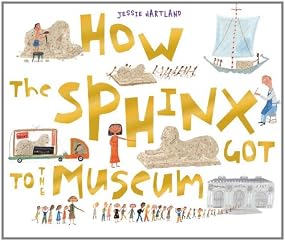
- Read “How the Sphinx got to the Museum” by Jessie Hartland This is a charming book about not just Hatshepsut but also the process of finding artifacts and getting them to the museum.
- Mark Timeline

- ART: The Judgment of Solomon interpreted by various artists http://www.biblical-art.com/biblicalsubject.asp?id_biblicalsubject=193&pagenum=1
- REVIEW: Narrate what they remember about Solomon
- Narrate and read excerpts “Unveiling the Kings of Israel” s pgs. 102-107
- Discuss “Queen of Sheba” Hatshepsut visits “Punt” in 9th year, possibly to visit her sister Neferbity (Their father was Thutmosis I) whom Solomon married. How that would have been why she was curious to meet him from correspondence from her sister. How the gold found in Tut’s tomb proved she would have certainly had the wealth the bible discusses.
- Read "King Solomon and the Queen of Sheba" by Blu Greenberg - This is a fascinating story. Make sure to read the preface and all the pages at the end. The intellect in me was convinced in the Hatshepsut until I read this and the modern day believe of the Israelites or the romantic in me leans toward Ethiopia now.
- Discuss now who you think the "Queen of Sheba" was? Could both accounts be true? Could Hatesheput have visited but Queen of Ethiopia be the one he fell in love with?
- MAP TREK: Map #17 - Solomon's Extended Kingdom
- Read “On the Shores of the Great Sea” – Chapter 13 “King Solomon’s Fleet"
- Mark timeline

No comments:
Post a Comment